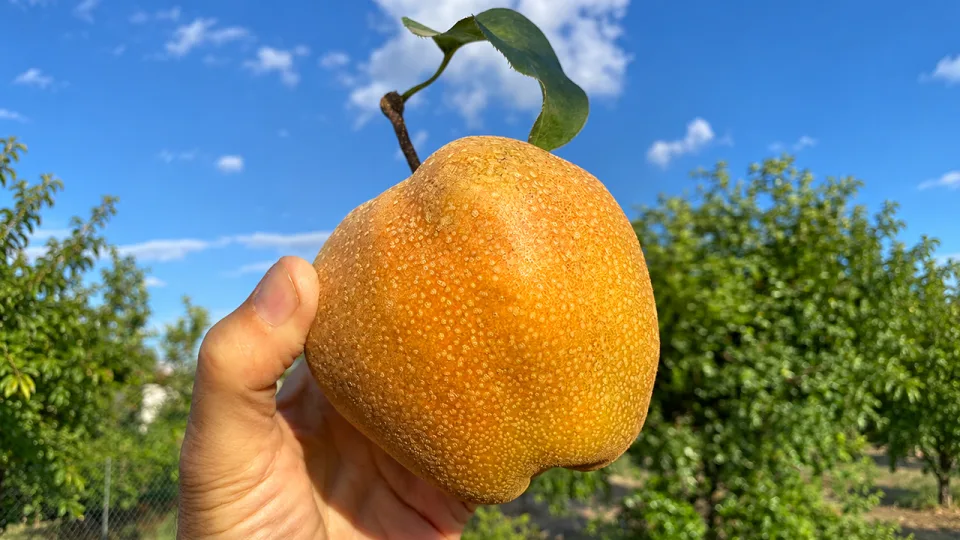
Korean breeders have made their mark in the world of pomology as masters of creating complex pear hybrids that define today’s standards of premium quality. Their successful path toward modern fruit, however, is not a matter of chance, but the result of purposeful breeding work and a deep understanding of the genetics of the genus Pyrus. Modern Korean pears are living proof of how the genetic heritage of wild ancestors can be sensitively linked with the demands of today’s consumer. At the heart of this breeding progress stands a fascinating symbiosis of three key Asian species: Pyrus bretschneideri, P. ussuriensis, and P. pyrifolia (syn. P. serotina). This evolutionary triangle laid the foundations for today’s group of nashi-type pears - fruit that has conquered the world with its unique crunchiness, explosive juiciness, and perfectly round shape.
Genetic Pillars of Breeding
Modern Korean cultivars emerged through thoughtful crossbreeding in which each of the three original Asian species plays a specific role. Pyrus bretschneideri acts as a donor of elegance and flavor, while Pyrus pyrifolia defines the typical structure and shape of nashi fruit. The essential balance in this combination is provided by Pyrus ussuriensis, which pours extraordinary vitality into the gene pool. This synergy made it possible to create hybrids that unite premium quality with exceptional resilience.
Contemporary Korean pear cultivars therefore cannot be viewed as pure species, but rather as masterfully balanced hybrids. They represent the culmination of an evolutionary and breeding triangle in which Chinese fruit refinement blends with unbreakable Ussurian hardiness and the distinctive nashi structure. It is precisely this genetic alignment that has enabled the development of cultivars that withstand harsh climatic fluctuations with ease while delivering abundant crops of aesthetically flawless and irresistibly flavorful fruit. This biological foundation and breeding craftsmanship are the true keys to understanding the global success of Korean pear growing.
Pyrus bretschneideri: The Guarantor of Premium Quality
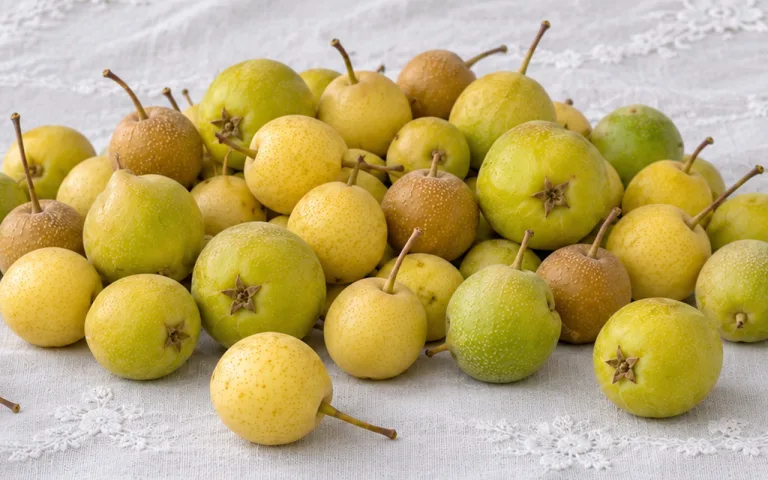
This species, known as the Chinese white pear (Bai li), represents the main pillar of sensory quality in the breeding process. It contributes to the genetic background of modern hybrids the traits most attractive to consumers: above-average fruit size, appealing appearance, high juiciness, and above all a fine flesh texture with a minimal share of undesirable sclerenchyma (stone) cells. Thanks to its high sugar content and aesthetically clean appearance, it serves as a guarantor of culinary pleasure. Its limitations, however, include lower frost resistance in both wood and blossoms, greater sensitivity to certain pathogens, and weaker adaptation to harsher continental conditions - shortcomings that had to be balanced out. This genetic source of premium fruit quality therefore required strong protection in the form of more resilient genetic partners.
Pyrus ussuriensis: The Unbreakable Pillar of Frost Hardiness
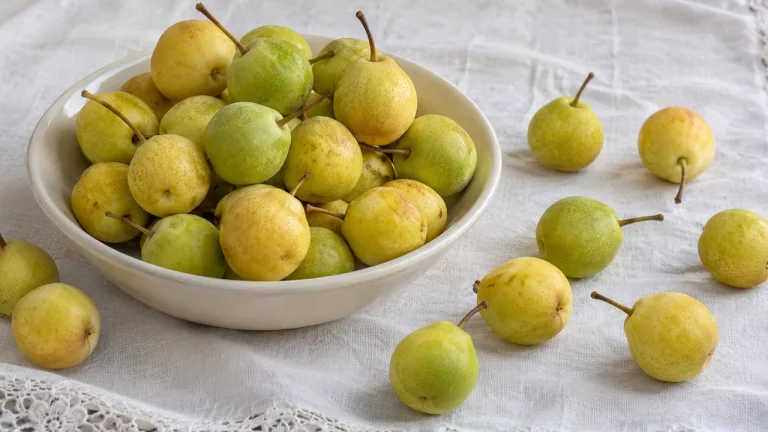
The Ussurian pear, native to the harsh regions of Manchuria, the Russian Far East, and the Korean Peninsula, is the key to the biological vitality of the entire tree. Within hybridization it plays an irreplaceable role as a donor of winter hardiness and ecological adaptability. It provides hybrids with robust vigor and the ability of wood and buds to withstand extremely low temperatures as well as spring frost fluctuations. Although its own fruit is small, of lower quality, and rather bland in flavor, without its genetic contribution modern Korean cultivars would not be able to thrive reliably over the long term under continental winter conditions. This species gives refined hybrids their famed vitality.
Pyrus pyrifolia: The Essence of True Nashi Character
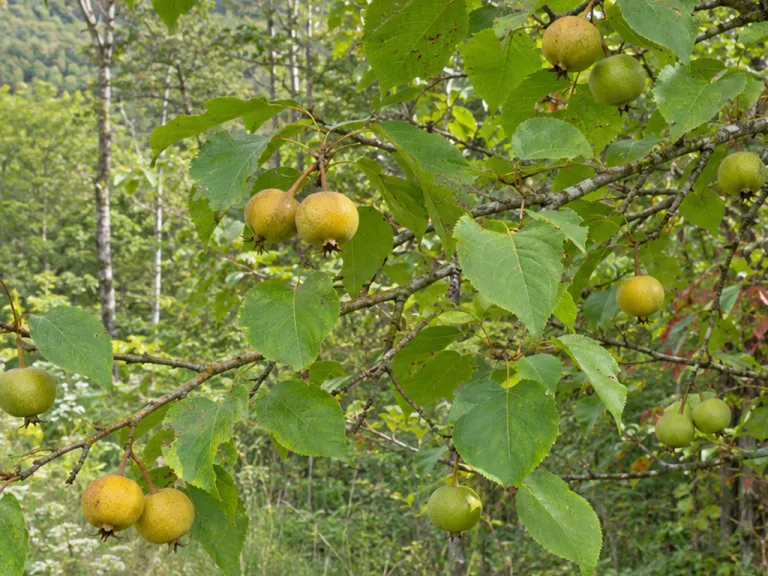
The Japanese–Chinese sand pear, historically also known under the synonym P. serotina, is the morphological foundation of the entire group and ultimately shapes the overall architecture of the modern fruit. It is this species that defines the identity of nashi pears - their iconic round shape and unique, crisp-crystalline flesh texture. Beyond visual and sensory traits, it also brings practical benefits to breeding, such as early onset of full bearing and excellent compatibility in interspecific crossing. In modern cultivars it serves as the structural base of the fruit, onto which quality, flavor, and adaptive improvements from the other species are layered in the further breeding process.
Genetic Synergy in Modern Pomology
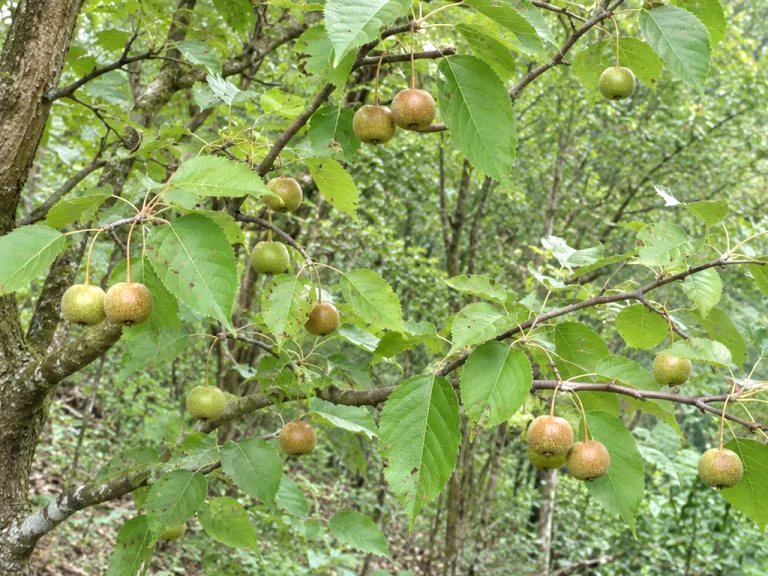
Contemporary Korean, Chinese, and Japanese cultivars are the result of sophisticated cooperation among these three species. They are genetic mosaics in which the generosity and delicacy of P. bretschneideri merge with the unique character of P. pyrifolia, underpinned by the indomitable vitality of P. ussuriensis. This combination creates complex interspecific hybrids that not only meet the strictest export criteria for size and sweetness, but are also capable of facing the climatic challenges of modern cultivation. It is precisely this perfect alignment of opposing traits that stands behind the global success of today’s breeding lines.
The genetic imprint of each species directly determines how successfully a cultivar adapts to specific site conditions. Genotypes with a dominant share of P. ussuriensis are natural favorites for more northern locations. Thanks to later bud break, they can avoid devastating spring frosts and pass through deep winter temperature drops without damage. The trade-off for this hardiness, however, may be a slightly coarser flesh texture. At the opposite pole are cultivars dominated by P. bretschneideri, which impress with size and sugar content but require sheltered sites and milder climates. Current breeding trends therefore focus on achieving the ideal outcome - combining premium Chinese quality, unbreakable Ussurian toughness, and the unique texture of Japanese nashi.
The core of the modern commercial assortment consists of cultivars bred in South Korea within prestigious national research programs. Since the second half of the 20th century, the main objective of these programs has been not only to surpass competing Japanese production, but also to bring fruit with new parameters to the market. Attention has focused on expanding the skin color spectrum, increasing mechanical resistance during transport, and above all on radically extending storage life. The result of this concentrated effort is cultivars that retain their freshness and flavor integrity for many months after harvest. Among those achieving outstanding results in winter storage are especially the following cultivars:
Chuhwang (Geumchonchu × 20th Century; Nijisseiki, 1967)
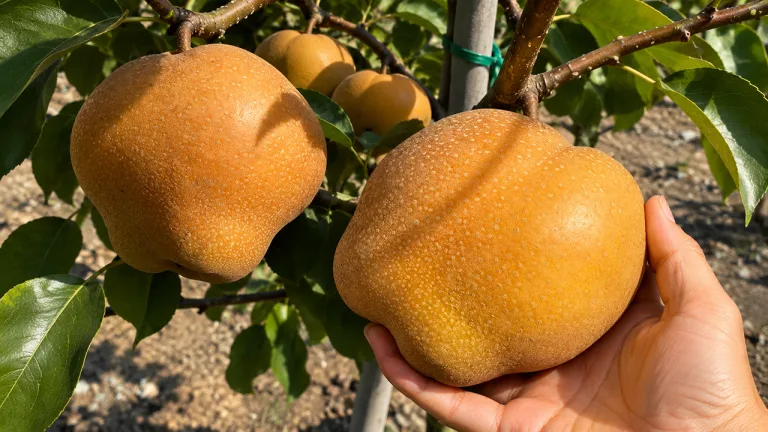
The cultivar Chuhwang (추황배 - literally “autumn yellow pear”) is not just an ordinary selection. In the history of Korean pomology it represents a key milestone. It was Chuhwang that launched the transition from growing local landraces to an era of systematic, scientifically guided breeding. It emerged as a direct response to the need to compete with Japanese production of the time and to offer the market a pear combining aesthetics, quality, and extended keeping ability. Biologically, it is a complex interspecific hybrid (a complex hybrid gene pool). A dominant share of Pyrus pyrifolia gave it the iconic shape and crispness, while genes from Pyrus bretschneideri enhanced the fruit with above-average size, higher sugar content, and a finer flesh structure. The presence of Pyrus ussuriensis gene pool provided the trees with indispensable vigor and frost hardiness, making Chuhwang a resilient foundation for modern orchards.
Main breeding contributions
Compared with older local cultivars, which were characterized by smaller fruit and a coarser flesh texture, Chuhwang brought a revolution to orchards. Its fruit is distinguished by a regular shape and flesh that is noticeably finer and less gritty on the palate. The flavor profile was refined for demanding consumers - high natural sugar content is in perfect harmony with a gentle, refreshing acidity, creating a more complex and less watery taste experience.
Strategic storability
One of the main goals in its development was to extend the marketing window. Chuhwang was endowed with a firmer skin and higher resistance to mechanical damage, significantly simplifying handling and transport. Thanks to a slower degradation of texture during storage, it allowed growers to sell the crop long after harvest. It ripens in the main autumn season, filling an important gap between early summer nashi and very late winter cultivars.
A historic milestone in Korean breeding
Chuhwang can be seen as a breeding bridge. It laid the genetic foundations on which today’s large-fruited, long-storing cultivars were later built. Through its quality it increased the competitiveness of Korean production on world markets and to this day remains a symbol of the successful modernization of Asian fruit growing.
Mihwang (Mansamgil × Fengshui; Hosui, 1982)
The cultivar Mihwang (미황배 - “beautiful yellow pear”) represents a newer, more sophisticated generation of Korean pears. Its arrival on the market responded to demand for visually captivating fruit that would meet the strictest criteria for “gift-grade” quality. While older generations focused primarily on yield and resilience, Mihwang raises the bar in aesthetics and sensory experience. Genetically, it is a precisely balanced hybrid. The base is Pyrus pyrifolia, which gave it the typical round shape and crisp flesh texture, but the dominant influence of Pyrus bretschneideri stands out more than in many other cultivars. This influence is responsible for its larger fruit size, famed tenderness, and high sweetness. Compared with hardier cultivars, Mihwang contains a lower share of Pyrus ussuriensis gene pool, which makes it better suited to high-quality growing sites where its flavor potential can fully develop.
Breeding goals: Aesthetics and tenderness
Mihwang’s hallmark is its unconventional coloration. Unlike typical bronze-brown nashi pears, Mihwang shines with a light yellow to golden-yellow skin with fine, almost invisible lenticels. This clean and elegant appearance quickly propelled it among premium dessert cultivars. Internal quality matches the exterior. Breeders managed to dramatically reduce the occurrence of stone cells, making the flesh extremely juicy yet surprisingly delicate. The flavor profile is free of any astringency. It is dominated by full sweetness, complemented only by a very subtle, refreshing acidity that prevents the taste from becoming flat.
Improved storability
Despite its visually delicate look, Mihwang surprises with practicality. Its skin, though seemingly fragile, is firm enough to withstand mechanical damage during handling. In storage, the flesh retains its integrity for a long time and shows no tendency toward premature mealiness, making it an excellent commercial item with high market value even several months after harvest.
Place in the history of Korean breeding
Mihwang embodies modern marketing in fruit production. It proves that Korean breeding can create a cultivar that is not merely food, but a luxury product. By emphasizing visual distinctiveness and top dessert quality, it opened the door to a new perception of Asian pears on the global market.
Manhwang (Chuhwang × Mansamgil, 1986)
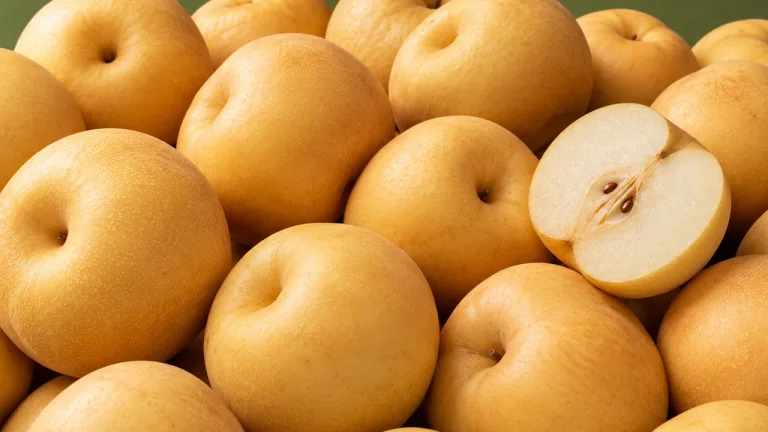
The cultivar Manhwang (만황배 - “late yellow pear”) represents a pinnacle of Korean breeding aimed at performance and stability. It arose from crossing the historically important Chuhwang with the robust Mansamgil, giving it exceptional genetic potential. Manhwang embodies the shift toward modern, commercially oriented cultivars capable of meeting the demands of large-scale production and international trade. Biologically, this hybrid was tuned to eliminate the weaknesses of its predecessors. While older nashi types often struggled with uneven fruit size and sensitivity during handling, Manhwang set a new standard in uniformity and firmness of the crop.
Breeding goals: Size and flavor depth
Manhwang’s dominant feature is its impressive fruit. It was selected for above-average size and a regular round shape, covered by an aesthetically attractive bronze-brown, smooth skin. The internal quality reflects breeders’ efforts to improve crispness. The flesh is dense and juicy but not excessively watery, with no tendency toward mealiness. It retains a firm structure that does not feel hard. In flavor, an excellent balance was achieved - high natural sugar content is complemented by a gentle, clean acidity that gives the pear a refreshing character without any trace of undesirable astringency.
Excellent storability and logistics
As a late cultivar ripening in mid-October, Manhwang was designed from the outset for long-term market supply. Thanks to a firmer skin and stable cellular structure of the flesh, it shows minimal losses during transport and mechanical sorting. Under cold-storage conditions it maintains first-class condition and crispness significantly longer than its predecessors, enabling smooth sales deep into winter.
Place in the history of Korean breeding
Manhwang confirmed Korea’s direction toward producing pears that are visually attractive, flavor-consistent, and logistically convenient. It is a typical export cultivar that successfully represents Asian fruit growing on the global market. In breeding lines it serves as a key genetic source for the development of future large-fruited and extremely long-keeping cultivars.
Mansu (Danbae × Mansamgil, 1978)
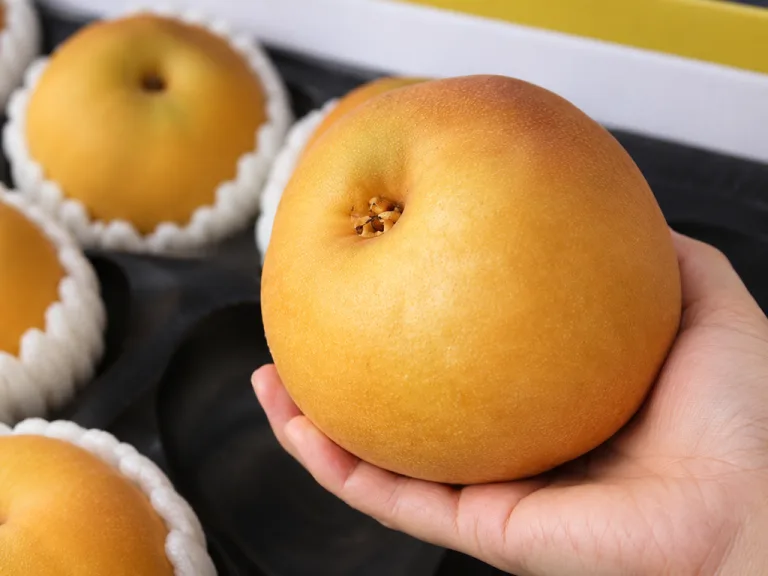
The cultivar Mansu (만수배 - “long-lived pear”) is a true aristocrat among Korean pears. It was bred with a clear vision: to create fruit that would surpass the storage limits of its time while also offering an impressive visual experience. Within the line of modern hybrids, Mansu holds the position of a cultivar that defines the concept of the “premium winter pear.” Its genetic makeup is a masterpiece of interspecific synergy. The genetic base is Pyrus pyrifolia, which provided the typical round shape and crisp flesh texture, while the influence of Pyrus bretschneideri is expressed in outstanding fruit size and a more silky flesh texture. The contribution of Pyrus ussuriensis is crucial here - it provides the tree not only with high vigor but also with ecological plasticity, allowing Mansu to cope with harsher climatic conditions than those required by purely southern, warmth-loving lines.
Breeding goals: Luxury in every detail
From the beginning, Mansu was selected for the gift and export market. Its fruits are exceptionally large, with a symmetrical round shape and a noble bronze skin adorned with a subtle lenticel pattern. This visual profile predestines it for prestigious placements in retail chains. Inside the fruit, an ideal balance was achieved. The flesh is very juicy and crisp, yet thanks to the reduction of stone cells it feels exceptionally refined on the tongue. The taste is clean, intensely sweet, and almost entirely devoid of acids, making it a favorite among lovers of sweet dessert fruit.
Storability
True to its name (“long-lived”), Mansu also excels in storage. Thanks to a firmer skin, it shows remarkable resistance to bruising and physiological disorders during storage. Slow sugar conversion and stable cell walls ensure that the pear retains crispness and juiciness deep into the winter months, minimizing losses for growers and traders.
Place in the history of Korean breeding
In breeding development, Mansu defines the standard for a large-fruited winter pear. While older generations often ran into technological limits in long-term storage, Mansu proved that it is possible to maintain premium quality and visual integrity even under demanding conditions of international export. It became a genetic pillar for newer generations of cultivars, bringing the desired balance between luxurious appearance and growing reliability. Its success confirmed that Korean pomology can produce cultivars that are not only exceptional in taste but also highly efficient economically.
Manpung (Mansamgil × Danbae, 1997)
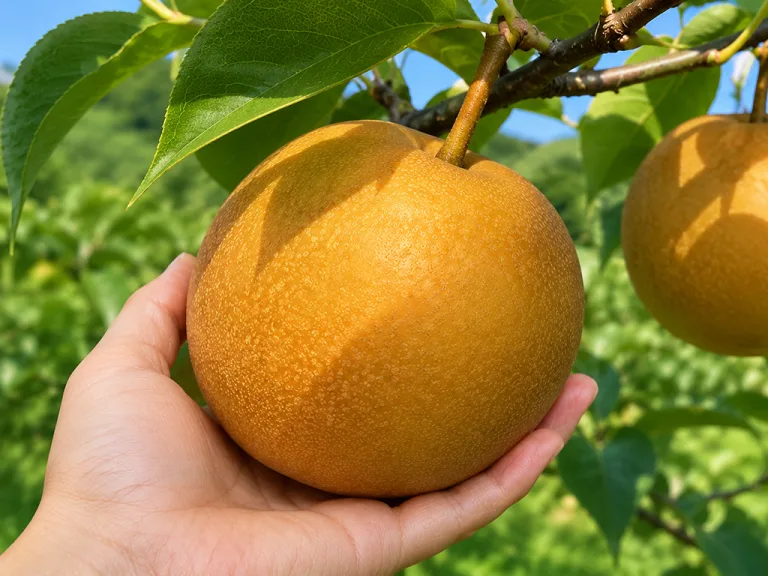
The cultivar Manpung-bae (만풍배 - “pear of abundant harvest/abundant wind”) represents one of the peaks of modern breeding focused on flavor exclusivity and large fruit size. It was introduced into practice in the late 1990s as the result of efforts to create a pear combining the robustness of traditional cultivars with the delicacy of dessert specialties. Manpung is now regarded as one of the best-tasting Korean pears overall. Genetically, it is a sophisticated interspecific hybrid in which Pyrus pyrifolia ensures unparalleled juiciness, while Pyrus bretschneideri gives the flesh its renowned delicacy and high sweetness.
Breeding goals: Maximum juiciness and volume
The main goal was to create fruit that would satisfy demand for extremely large pears. Manpung commonly exceeds 750 g in weight while maintaining a regular round shape. The skin has an attractive golden-brown color and feels smoother than that of many older bronze cultivars. The internal quality is defined by the expression “water in solid form.” Juice content is unrivaled within the nashi assortment. The flesh is very crisp yet almost instantly melts on the tongue, with a minimal presence of stone cells. The flavor profile is intensely sweet with very low acidity.
Improved storability and ripening
Manpung ripens from late September to early October. Despite its high juiciness, it shows surprisingly good stability in storage. During cold storage, sugars do not degrade rapidly; on the contrary, the cultivar is known for developing deeper flavor nuances after a short period of resting. Its firm structure ensures good handling during packing.
Place in the history of Korean breeding
Manpung closed out the 20th century as a symbol of Korean breeders’ success. It demonstrated that large fruit size does not have to come at the expense of flesh quality. Today it is a key cultivar for the premium domestic market and has become a model for breeding new, flavor-oriented lines.
Whangkeum (Nijisseiki × Shinsui, 1984)
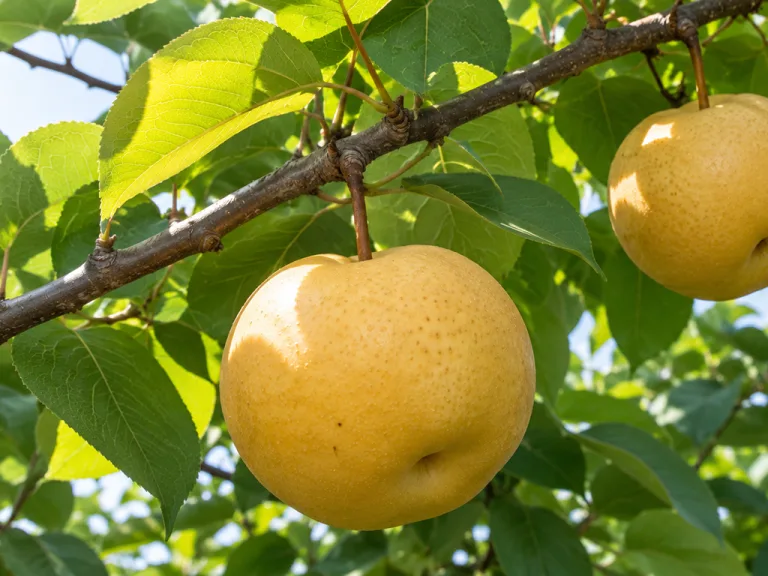
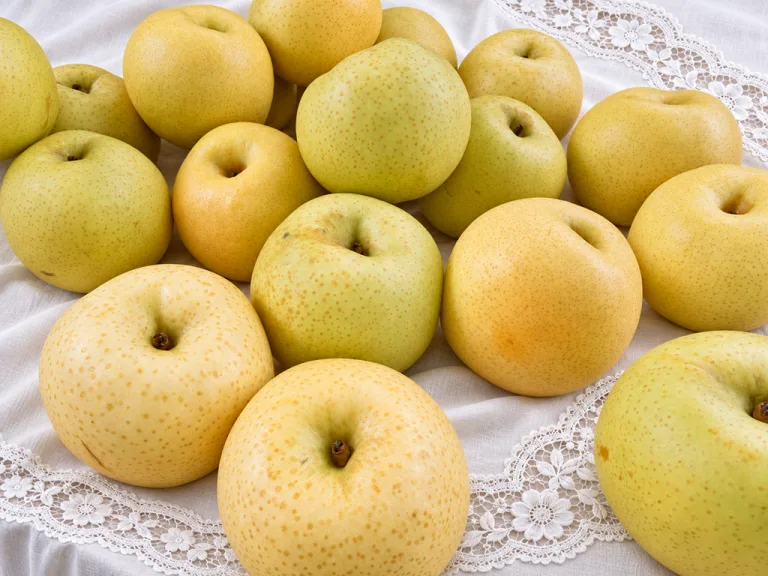
The cultivar Whangkeum, also known as Hwangkeum (황금배 — “golden pear”), is a breakthrough achievement of Korean breeding in the segment of smooth-skinned pears. Its development in the 1980s responded to the need to create a cultivar that would stand out aesthetically from traditional bronze types and appeal to a global consumer accustomed to the look of classic yellow pears. Genetically, the influence of Pyrus bretschneideri dominates, which is reflected in exceptional flesh tenderness and the absence of harsh texture, while nashi-type crispness remains fully preserved thanks to the Pyrus pyrifolia gene pool.
Breeding goals: Elegance and a delicate texture
Whangkeumbae was selected to achieve a thin, bright golden-yellow skin without russeting, which was unique in the Korean assortment at the time of its release. Lenticels are very fine and almost invisible, giving the fruit an exceptionally clean, apple-like appearance. Breeding progress is most evident in the flesh texture. Whangkeumbae belongs to cultivars with an extremely low content of sclerenchyma cells. The flesh is white, extremely tender, and crisp. The flavor is balanced and refreshing, with a harmonious ratio of sugars to acids, making it an ideal dessert pear for fresh consumption.
Storability and market value
From a storage perspective, Whangkeumbae requires a specific approach. Because of its thin and delicate skin it is more prone to bruising, which is why in Korea it is packed into protective foam nets directly in the orchard. If low-temperature conditions are maintained, however, it retains first-class quality and bright color for 3 to 4 months, making it an excellent export item to the USA and Europe.
Place in the history of Korean breeding
Whangkeumbae is Korea’s most successful export ambassador. It was this cultivar that opened the doors of demanding Western markets to Korean pears. In breeding history, it confirmed that Korea can produce world-class cultivars capable of direct competition with the best Japanese selections.
Triumph of Korean Pomology
The development of modern Korean pears is a model example of how purposeful breeding can connect the genetic resources of wild ancestors with the uncompromising demands of the global market. The synergy of P. bretschneideri, P. ussuriensis, and P. pyrifolia created a unique biological platform on which stand cultivars capable of combining flavor refinement with high vitality and reliable productivity. Cultivars such as Chuhwang, Mihwang, Manhwang, Mansu, Manpung, and Whangkeum document a fascinating progression - from regional varieties to highly commercial, genetically complex hybrids. Each represents a specific step in the search for balance between fruit quality, the ability to survive long winter storage, and tree stability in orchards. This approach is key to understanding why Korean pears have become a global benchmark of quality, in many respects surpassing traditional European standards.