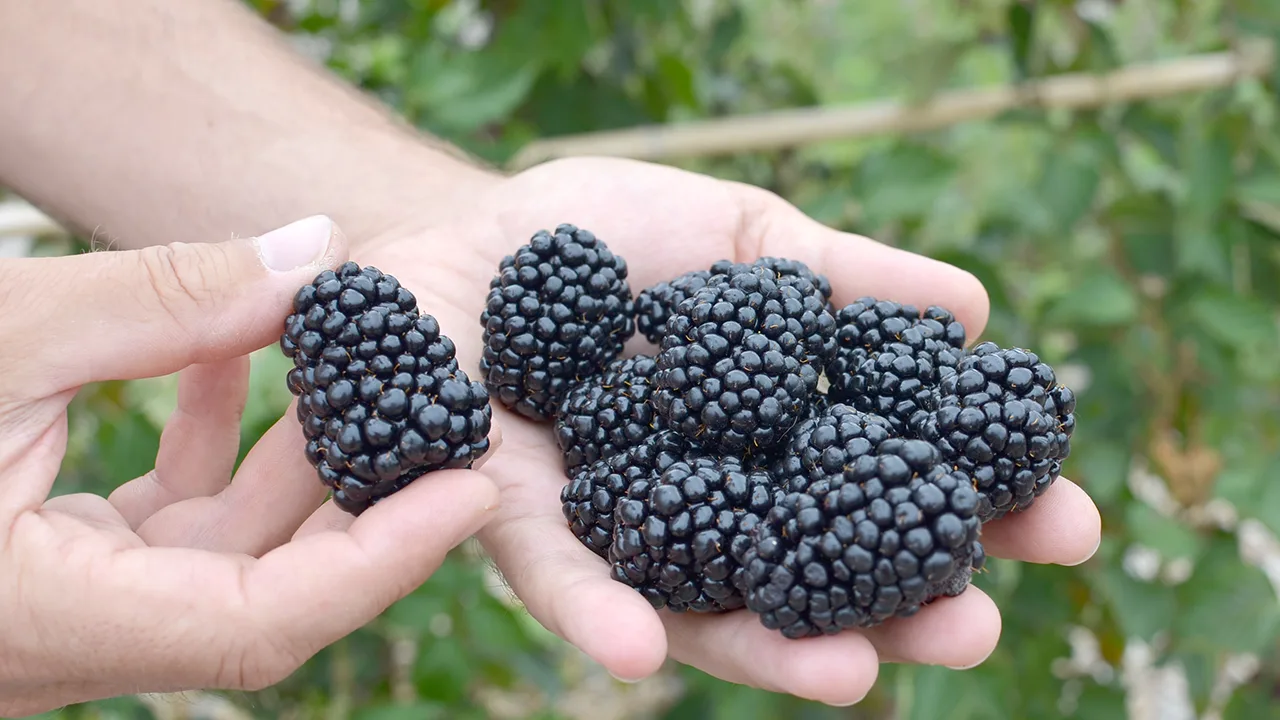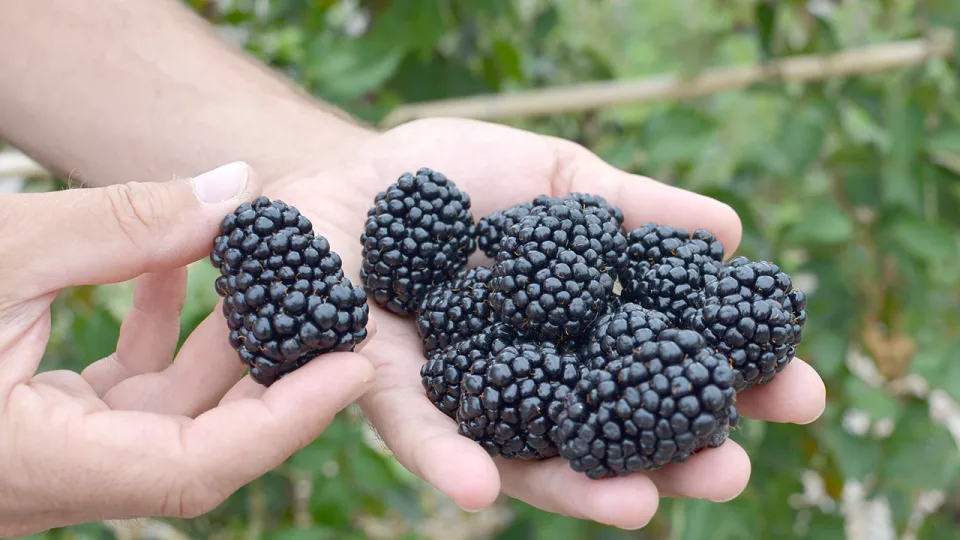
The blackberry (Rubus fruticosus) is one of the most rewarding small fruits for gardens and small commercial plantings. Modern varieties are no longer limited to thorny, unwieldy bushes at the edge of the property. Breeding has produced thornless, erect, semi-erect and primocane-fruiting varieties that can crop early, over a long period and, with proper pruning, very abundantly. But success depends on more than the variety. A sunny site, good airflow, adequate watering while the fruit develops, sturdy support, annual pruning and prompt picking during peak ripening are just as important.
An important note for growers: Blackberries are often considered easy to grow, but the biggest mistakes are neglecting pruning and planting too densely. Dense growth dries more slowly after rain, the fruit softens, the risk of gray mold increases, and pests find ideal conditions. Blackberries can grow in less-than-ideal soil, but they produce large, high-quality fruit best in full sun, in humus-rich, well-drained soil, and when fruiting canes are regularly renewed.
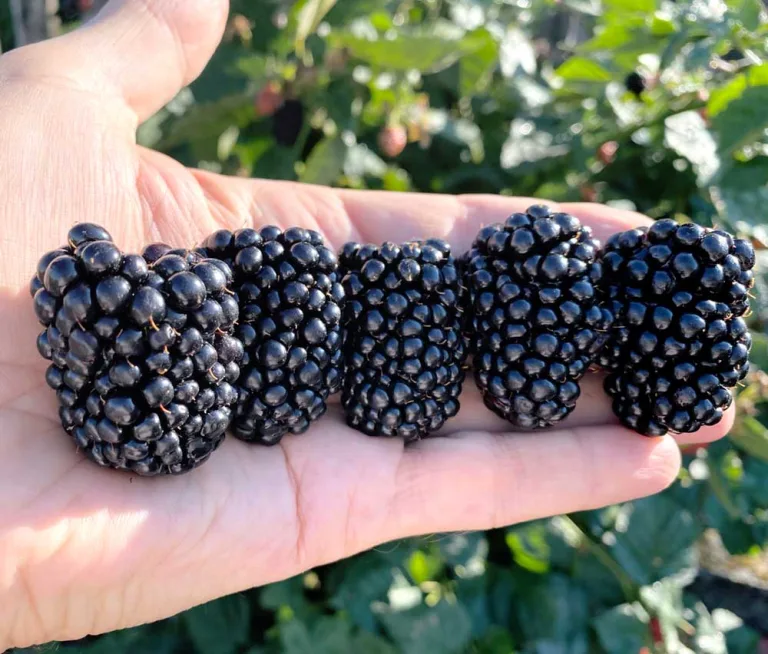
The blackberry is no longer just a thorny wild bush
Most modern garden blackberries are the result of targeted breeding, particularly in the United States, where breeders have long worked to improve fruit size, flavor, firmness, thornlessness, yield and storage life. Today's varieties are classified by growth habit as erect, semi-erect or trailing, by the presence of thorns as thorny or thornless, and by fruiting habit as traditional floricane-fruiting or newer primocane-fruiting types (Fernandez, 2024).
Traditional blackberries fruit on second-year canes. A strong cane grows in the first year, and in the second year it develops lateral shoots that bear flowers and fruit. After harvest, the cane dies and should be removed. Primocane-fruiting blackberries can also crop at the tips of first-year canes, in the same year those canes grew. This can extend the harvest into late summer or autumn, although in Central Europe success depends on the length of the growing season, temperatures and how early the variety ripens.
In recent years, varieties have emerged with firmer fruit and better postharvest quality. One example is the American thornless variety Sweet-Ark® Immaculate, released in 2023 and introduced as a floricane-fruiting blackberry with medium to large fruit and improved postharvest firmness. A similar breeding direction can be seen in Prime-Ark® Horizon, Sweet-Ark™ Ponca and Sweet-Ark™ Caddo, where thornlessness, flavor, firmness and better fruit handling are combined (University of Arkansas Fruit Breeding Program, 2023).
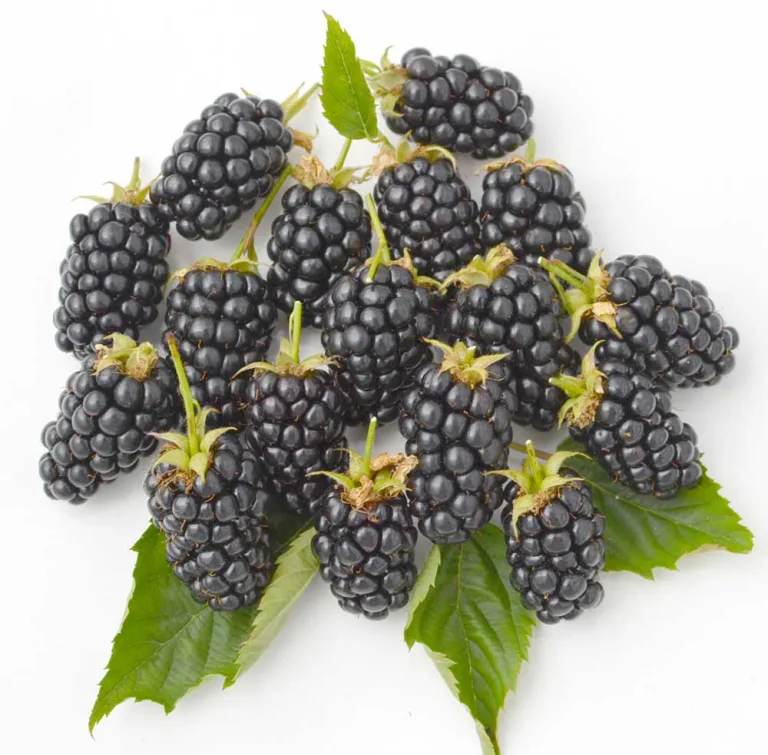
Site and soil
Blackberries need as much sun as possible. They will grow in partial shade, but their canes do not mature as well, the flowers are weaker, the fruit tends to be more acidic, and the plants stay damp longer. A warm site with good airflow, but not exposed to drying winds, is best. In colder areas, a south- or southwest-facing position sheltered by a fence, wall or outbuilding is an advantage. Thornless varieties are often more susceptible to winter injury than older thorny types, so in harsher locations it pays to choose hardier varieties and avoid applying too much nitrogen in late summer.
The ideal soil is loam to sandy loam, rich in humus, well drained and adequately supplied with water. Blackberries do not tolerate persistently waterlogged roots, as they are more prone to root diseases in poorly drained soil. Professional growing recommendations give a suitable pH of approximately 5,5 to 6,5 and advise planting in a raised bed where soil is heavy or waterlogged (Fernandez, 2024). In practice, blackberries need a combination of humus, air and water—not dry gravel, but not standing water either.
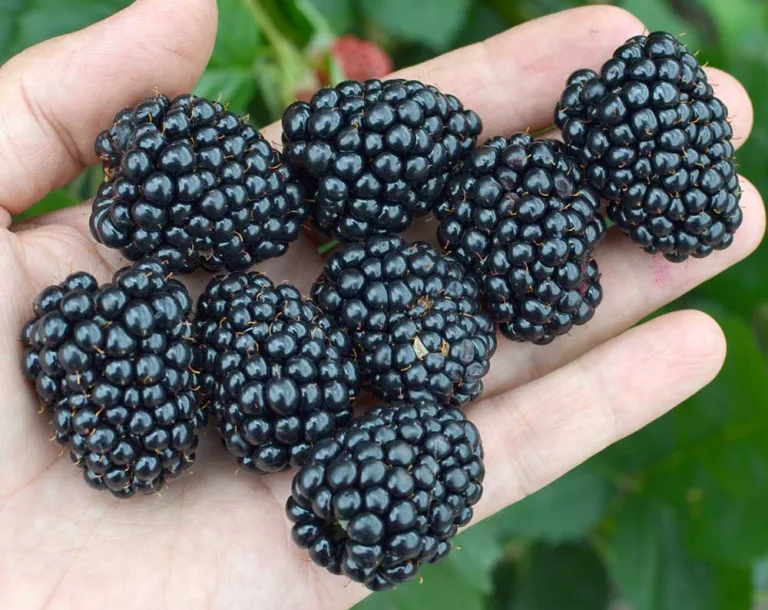
Planting blackberries
Container-grown plants can be planted from spring to autumn, but spring planting is the safest option. This gives the plant a full season to establish roots and leaves it better prepared for its first winter. When planting in autumn, mound soil or mulch around the root zone to protect the young plant from temperature fluctuations.
Prepare the soil in advance if possible. Work compost or well-rotted manure into the planting site. If the soil is poor, also apply a base dressing of phosphorus and potassium. Use nitrogen sparingly: overly vigorous late growth makes it harder for the canes to mature and may increase their susceptibility to winter injury. Make sure the root ball has not dried out and that the roots make good contact with the surrounding soil. Water thoroughly after planting.
Spacing depends on the growth habit. In gardens, thornless semi-erect varieties are most often spaced 1,5 to 2 m apart within the row. Erect types can be planted a little closer together, while trailing and very vigorous varieties need more room. Current recommendations for home gardens suggest about 0,9 to 1,2 m for erect and semi-erect types and 1,8 to 2,4 m for trailing types, but under local conditions, wider spacing is more practical for vigorous thornless varieties (Fernandez, 2024).
Practical tip: If garden space is limited, plant fewer blackberries and tie the canes regularly to a sturdy support. One well-tended, regularly pruned blackberry plant often produces more high-quality fruit than three plants crowded into too little space.
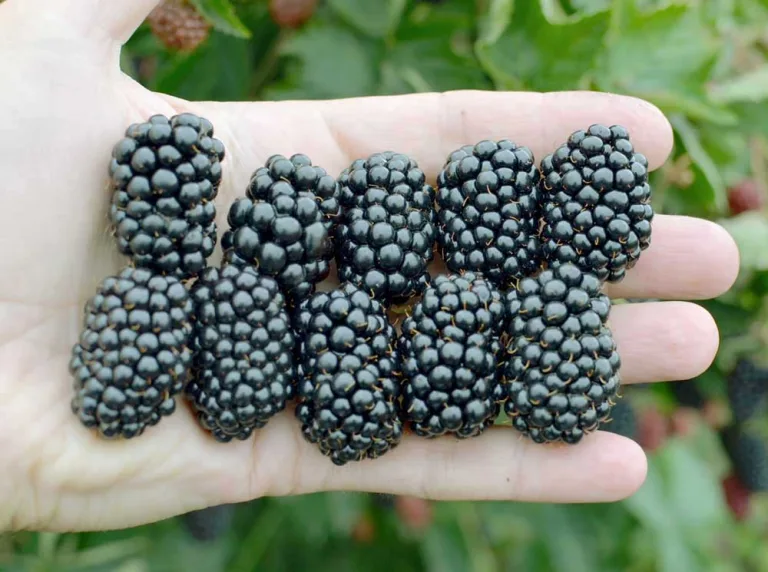
Support is almost essential for modern blackberries
Blackberries produce long canes that bend under the weight of the fruit. Even erect varieties are easier to manage, healthier and easier to pick when grown on a support. The simplest setup is a two-wire trellis with wires at about 90 and 150 cm. Train the canes in a fan, keep old fruiting canes separate from young canes, or tie them to either side to keep the center of the plant open.
Support also helps keep plants healthy. The fruit stays off the ground, the leaves and berries dry faster after rain, and the planting is easier to inspect. For soft fruit, this also matters because of the pest Drosophila suzukii, which favors shaded, damp, dense plantings. Current management recommendations for this pest emphasize frequent picking, sanitation, opening up the canopy to let in light, and removing overripe or infested fruit (Cato, 2024; Cornell Berry Pest Monitoring Network, 2024).
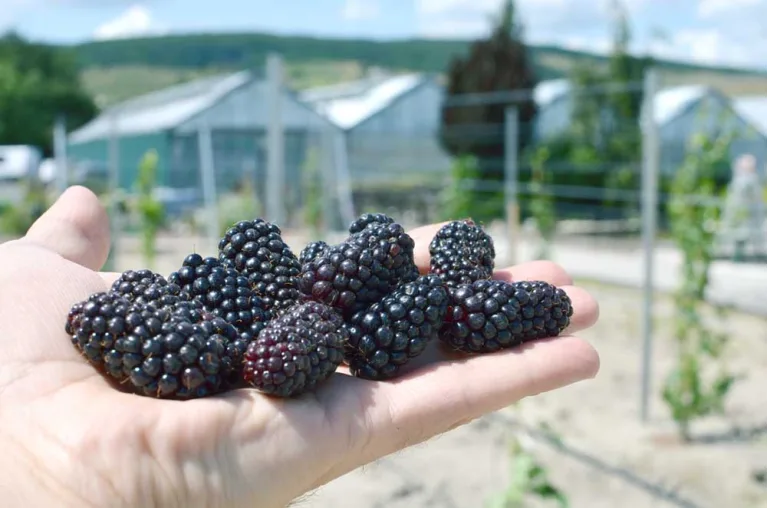
Pruning and training
Pruning is essential for blackberries. Without it, the plant quickly becomes a dense tangle that is difficult to harvest, with poorer fruit quality and greater disease pressure. The basic rule is simple: after harvest, cut the canes that have already fruited back to the base. Keep the young canes that grew during the season to bear next year's crop.
For erect and semi-erect blackberries, pinch out the tips of young canes during the growing season. Remove the soft tip when the cane reaches the top wire or the desired height. This encourages lateral shoots, which will bear most of the following season's crop. Oregon State University notes that pinching the tips of primocanes on erect and semi-erect blackberries can significantly increase yield and make the plants easier to train (Strik, 2014).
Just before spring, remove damaged, weak, diseased and frost-injured canes. Keep several of the strongest canes on each plant—often 5 to 6 in home gardens, with the number in more intensive systems depending on plant vigor and the support. Shorten lateral growth to prevent overcrowding. More recent practical recommendations suggest selecting about 3 to 8 strong main canes and shortening the laterals to about 30 to 45 cm, depending on the trellis design and plant vigor (Lepsch a Fernandez, 2025).
The most common pruning mistake: Growers keep all the young canes because it seems a shame to remove them. The result is not a bigger crop, but smaller berries, poorer color development, slower drying and more difficult picking.
Watering, mulching and feeding
Established blackberries can tolerate a short dry spell better than raspberries, but berry size and juiciness depend heavily on water during flowering, fruit swelling and ripening. Do not let the plants dry out for extended periods while the fruit is developing. Mulch made from bark, wood chips, straw or composted organic matter helps retain soil moisture, suppress weeds and support soil life.
Apply a moderate amount of nitrogen in spring, but avoid overdoing it. If growth is vigorous and there are many soft shoots, cut back on nitrogen and focus on balanced nutrition, organic matter and potassium, which is associated with fruit quality and tissue maturation. After harvest, a light feeding and watering can help nourish the young canes that will carry next year's crop.
Harvest and storage
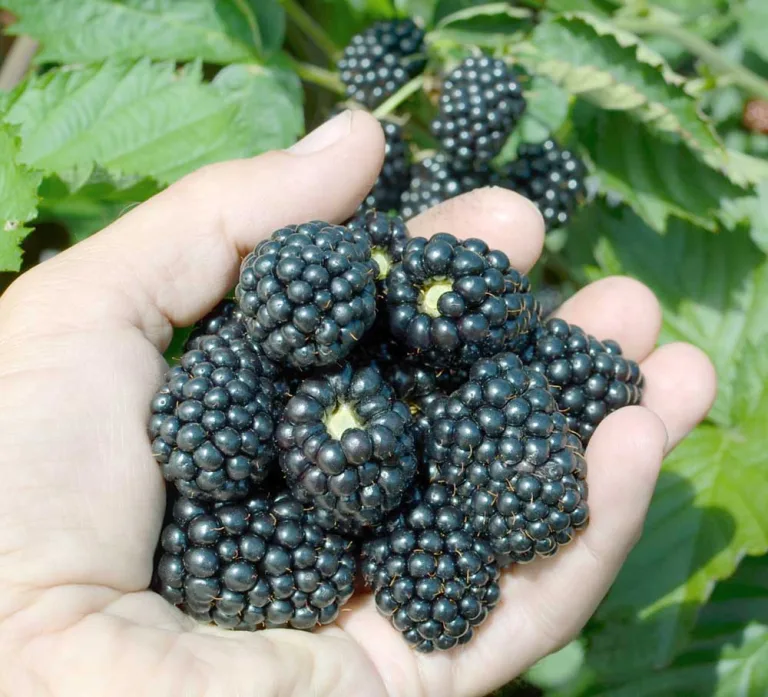
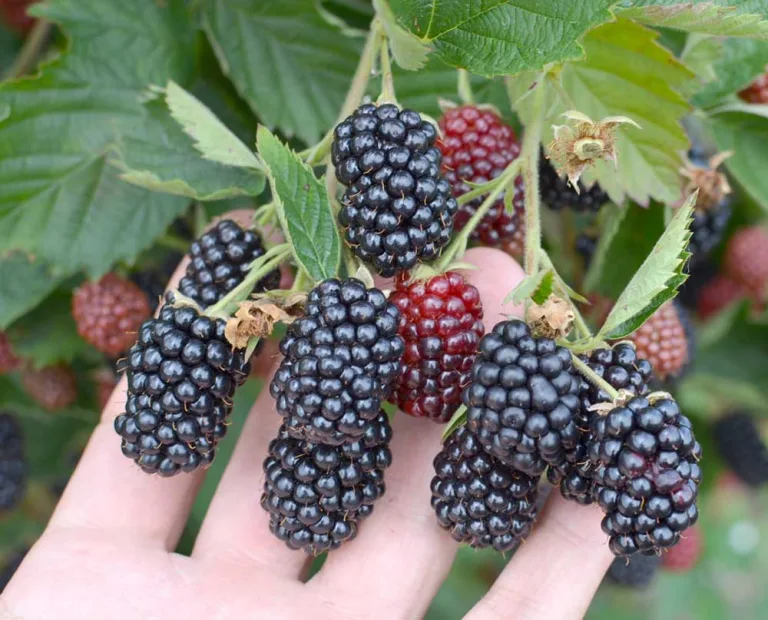
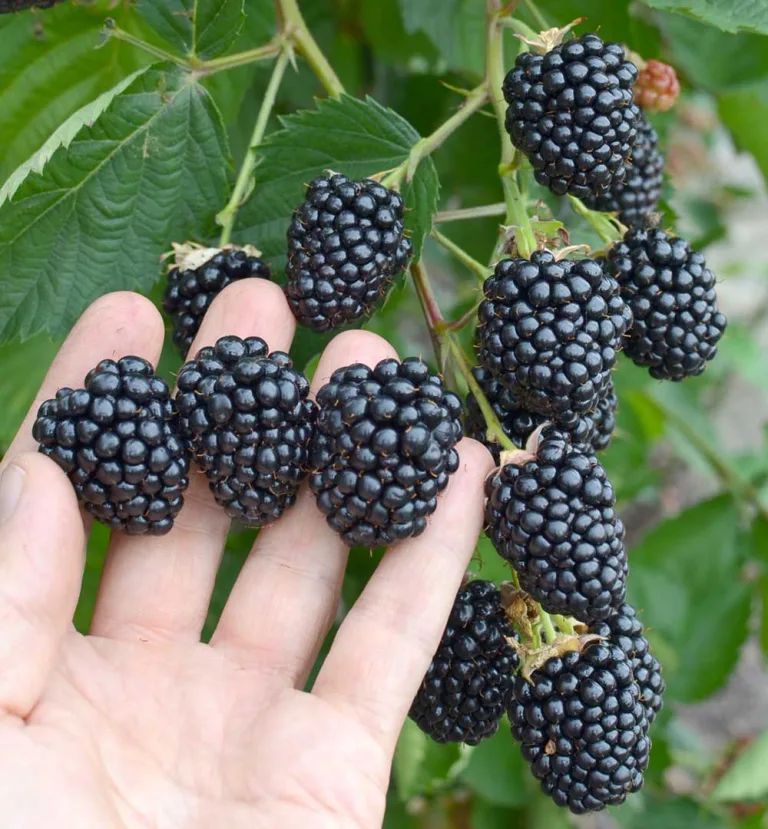
Blackberries ripen gradually. Depending on the variety and location, picking can start as early as June and continue into autumn with late or primocane-fruiting types. The harvest window for a single variety can last several weeks. Pick regularly, ideally every 2 to 3 days, or more often in warm weather. A ripe blackberry is deep black, comes away easily from the plant and has a full flavor.
Blackberries do not ripen after picking in the same way as some other fruits. Picked too early, they are more acidic and less aromatic; overripe berries break down quickly and are more susceptible to pests and rot. In practice, two stages are worth distinguishing: dull black berries have the best flavor, while glossy black berries are slightly firmer and better suited to short-term storage (Fernandez, 2024).
After picking, move the berries into the shade as quickly as possible, then refrigerate them. Gray mold most often develops in wet weather, when fruit is physically damaged or when cooling is delayed. Professional recommendations therefore emphasize rapid cooling, picking into shallow containers, using drip irrigation rather than spraying water on leaves and fruit, and training the canes to allow good airflow.
Blackberry diseases and pests
The most common problem during ripening is gray mold (Botrytis cinerea), which causes fruit to soften and rot. The best prevention is good airflow, regular picking, adequate watering and prompt removal of overripe or damaged berries. Disease pressure can be significantly higher when the weather is rainy during flowering and ripening.
In recent years, spotted wing drosophila has also become a particularly important pest of soft fruit (Drosophila suzukii). Unlike common fruit flies, it can attack soft fruit that is still ripening. Prevention includes frequent picking, leaving no overripe fruit on the plants or ground, opening up the canopy, removing weeds and monitoring for the pest. Commercial growers use traps and, when necessary, registered products. In home gardens, the priorities are sanitation, prompt picking and disposal of infested fruit (Cornell Berry Pest Monitoring Network, 2024; OSU Extension, 2024).
The basics of ecological pest and disease control: Do not let blackberries grow into a dense wall of foliage. Keeping the canes in a narrow, airy row, regularly removing spent canes, using drip irrigation and mulch, and picking without leaving overripe fruit behind are often more effective than resorting to sprays once a problem has developed.
Blackberries as a nutritious fruit
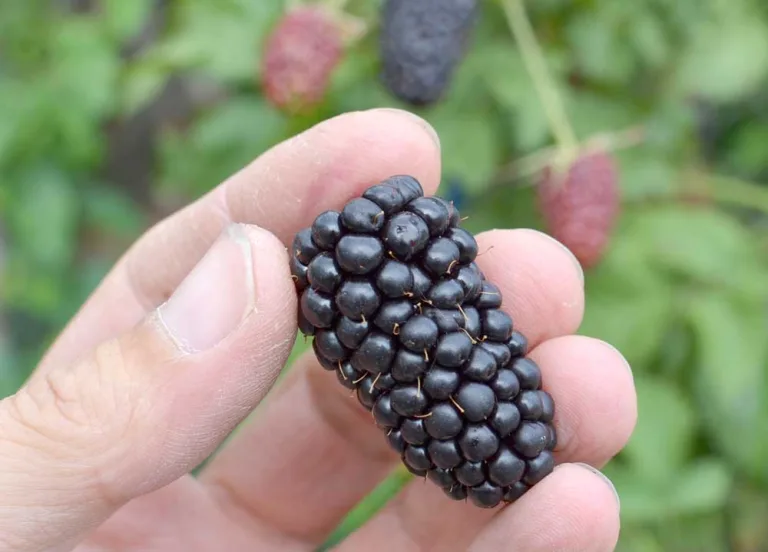
The older claim that blackberries heal and strengthen blood vessels should be stated more cautiously. Blackberries are not a medicine and do not replace treatment for high blood pressure, vascular disease or metabolic disorders. They are, however, a valuable part of a varied diet. They contain fiber, vitamin C, vitamin K, manganese and a range of polyphenols, particularly anthocyanins, flavonols and ellagitannins (USDA-ARS, 2024; Wu et al., 2024).
According to USDA data, one cup of raw blackberries, approximately 144 g, provides about 62 kcal, 7,6 g of fiber, 30,2 mg of vitamin C, 28,5 µg of vitamin K and approximately 0,93 mg of manganese. Blackberries are also low in fat and have a relatively favorable ratio of sugars to fiber. Their high fiber content is important for digestion, and their polyphenols are being studied for antioxidant and anti-inflammatory effects (USDA-ARS, 2024; Wu et al., 2024).
Fresh or gently processed berries provide the most biologically active compounds. Freezing is a very good way to preserve the harvest, keeping the berries available out of season for smoothies, cakes, sauces, jams or fruit mixes. Blackberry leaves are traditionally dried for tea.
Practical takeaways
Blackberries are an excellent garden fruit if you give them sun, support and annual pruning. Modern thornless varieties have made picking much easier and made blackberries practical for smaller gardens. But a neglected planting will not produce large, sweet, healthy berries. The best results come from an open planting, regular cane renewal, adequate watering while the berries swell, prompt picking and good sanitation to help prevent rot and spotted wing drosophila.
For home gardeners, the approach is straightforward: plant a good thornless variety, put up a sturdy support from the start, keep the plant from becoming overcrowded and remove all spent canes after harvest without hesitation. Grown this way, blackberries can produce large, aromatic, nutritious berries for many years.